A bright, healthy smile is not just about brushing and flossing; professional dental Care is similarly important. One of the most common procedure recommended by dentists to preserve oral hygiene is dental scaling.If your dentist has suggested this, you may think “Do the teeth hurt?” Let’s break it for you.
What Is Teeth Scaling?
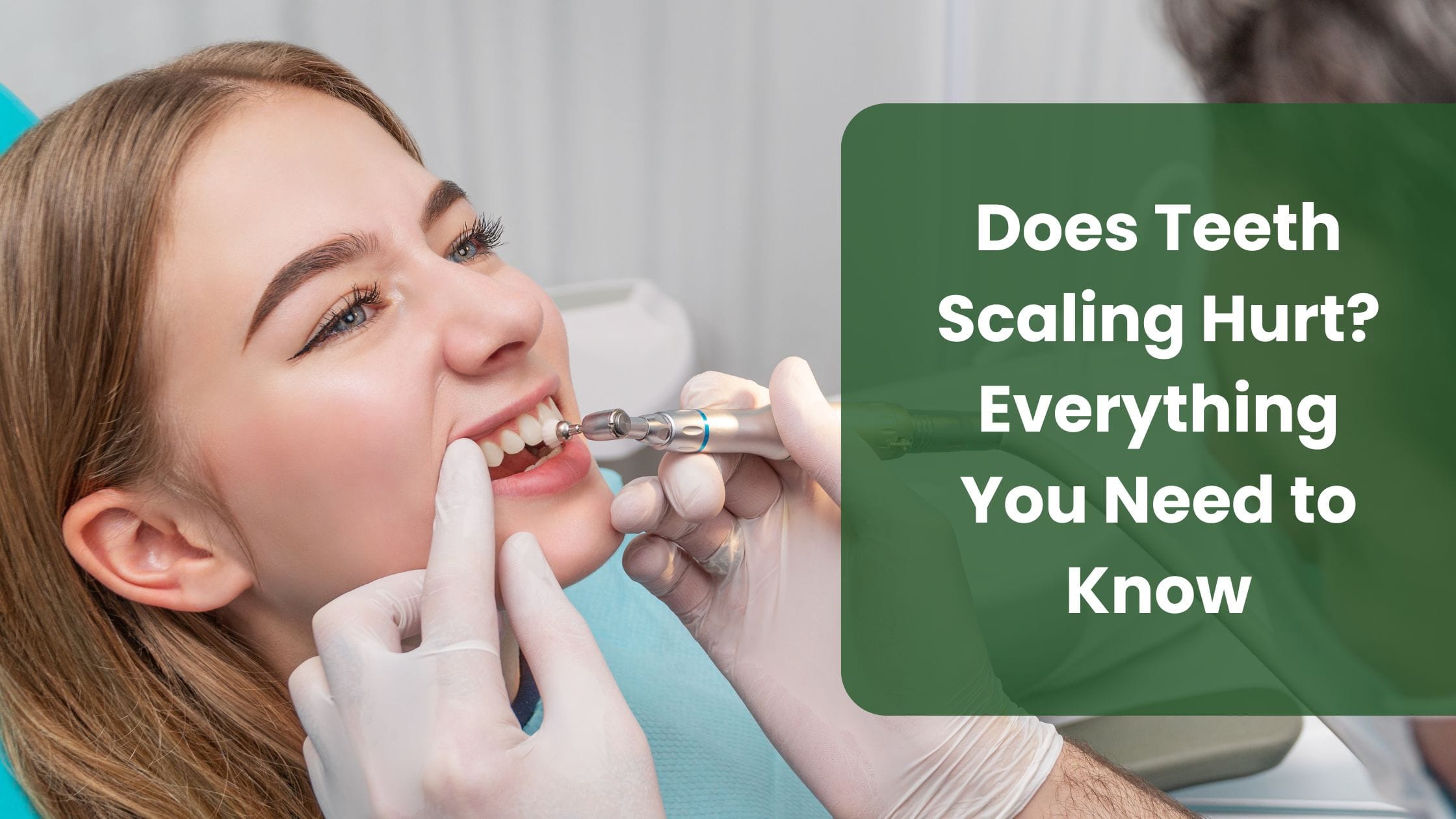
Teeth scaling is a professional dental cleaning procedure that gets rid of hardened plaque (tartar) and microorganisms from your enamel and gums. Unlike regular brushing, which cleans on the surfaces, scaling targets deep deposits around and beneath the gumline. This makes it exceptionally effective in preventing gum infections and keeping breath clean.
Why Is Teeth Scaling Important?
Even if you brush and floss daily , plaque can nonetheless gather in tough-to-reach areas. Over time, this hardens into tartar, which cannot be removed by brushing on your own. If unnoticed, tartar ends in gum infection, bleeding gums, and even enamel loss. Regular scaling can help to
- Prevent gum disorder
- Maintain a whiter and cleaner smile
- Improve overall oral hygiene
- Save money on costly dental procedures in the future.
Does Teeth Scaling Hurt?
The level of discomfort depends on your oral health.
- For Mild Cases—If your teeth and gums are healthy, you’ll probably experience little to no pain—only moderate scraping or vibrations.
- For Sensitive Gums—If your gums are swollen or infected, you can experience slight discomfort at the time of scaling.
- For Severe Cases—Deep cleansing or root planing can be required, in which local anesthesia is used to keep you comfortable.
In maximum instances, the procedure is well tolerated and far less painful than people expect.
What Happens During the Procedure?
A traditional teeth scaling consultation involves several steps:
- Initial Examination—Your dentist will look into your gums and tooth.
- Scaling Process—Using hand devices or an ultrasonic scaler, tartar and Plaque is gently removed.
- Polishing—Teeth are polished to ease surfaces and prevent buildup.
- Fluoride therapy (optional)—at times, a fluoride coating is applied for extra Protection.
The whole process usually takes 30 to 60 minutes depending on the severity of tartar buildup.
What to Expect After Teeth Scaling
After the method, it’s regular to have moderate tooth sensitivity or gum soreness for a day or two. This commonly fades quickly, and your teeth feel smooth and look bright. To reduce discomfort.Drinking lukewarm water and avoid Very spicy or sour foods for 24 hours can help reduce the discomfort.
Aftercare Tips for Healthy Teeth
- Brush twice a day with fluoride toothpaste
- Use a smooth-bristle toothbrush to avoid inflammation of the gums
- Floss daily to save you plaque buildup.
- Visit your dentist every 6 months for habitual cleansing
- Limit sugary snacks and acidic drinks to protect teeth
Benefits of Regular Teeth Scaling
The essential advantage of scaling is long-lasting oral health. This not only effectively prevents gum disease but also improves confidence by giving a brighter smile. Regular scaling can also enhance overall health , as poor oral hygiene is associated with conditions such as coronary heart disease and diabetes.
Conclusion
Teeth scaling can also sound intimidating; however, in fact, it’s a simple, safe, and relatively beneficial technique. Most people experience little to no pain, and the Freshness and cleanliness later on are well worth it. If you’re concerned about discomfort, speak to your dentist—they are capable of using strategies to Make the process as painless as possible. Remember, investing in scaling can prevent larger dental problems tomorrow.